

61,512
Population of Palm Harbor
17,566
Residents aged 65 and older in Palm Harbor
463
Senior Living & Care Options in Palm Harbor

$5,777/Month
Average cost of Senior Living & Care in the area.
Palm Harbor, with a population of 61,512, is home to 17,566 residents aged 65 and older. The city offers 463 senior living and care options. The average monthly cost of senior living & care in the area is $5,777.
In 1985, the people of Palm Harbor, FL, voted to tax themselves to pay for their own library and recreation services. The agency they created still runs both. That matters because Palm Harbor, FL, has no city government. It's an unincorporated community in Pinellas County. If you're exploring senior living in Palm Harbor, FL, many nearby classes and library programs come from a local agency, not a city hall. Residents chose to fund it themselves.
The Palm Harbor Fire District gives the community clear borders. Klosterman Road marks the north end, and Curlew Road marks the south. The Gulf lies to the west, with Lake Tarpon to the east. Palm Harbor Fire Rescue serves the community inside those lines, along with the Pinellas County Sheriff's Office. One library service reaches only homes within the district, so it helps to know which side of the line an address is on.
Medicare's hospital records show no hospital inside Palm Harbor, FL, so hospital care happens in neighboring cities. Mease Dunedin Hospital in Dunedin, FL, runs its emergency room 24 hours a day, seven days a week. So does Mease Countryside Hospital in Safety Harbor, FL. It's also certified as a primary stroke center, a credential for stroke care. AdventHealth North Pinellas in Tarpon Springs, FL, and Morton Plant Hospital in Clearwater, FL, list emergency services as well. A useful tour question is how residents reach doctors in those cities.
NOAA's 1991 to 2020 normals for the Tarpon Springs, FL, weather station put the average January low at 50.7°F. That's well above freezing. The average July high there is 90.6°F, so summer afternoons run hot. That heat is a good reason to ask when a community plans its outdoor activities in July and August.
The sections below cover five kinds of care, one at a time. Each section ends with questions to raise by phone or in person. Every provider is listed, it's free for families, and there's no login. When a few communities look promising, contact them yourself and set up visits.
Palm Harbor, FL at a Glance


Home Care in Palm Harbor, Florida
View All Providers-
5.0Verified
Home Helpers Home Care of Clearwater
210 S. Pinellas Avenue Tarpon Springs, FL 34689
Home Care (Non-Medical) -
5.0Verified
Visiting Angels - Tarpon Springs
35 West Lemon St Tarpon Springs, FL 34689
Home Care (Non-Medical) -
4.9Verified
Always Best Care of Tarpon Springs
905 W. Martin Luther King Jr. Drive Suite 520 Tarpon Springs, FL 34689
Home Care (Non-Medical) -
4.4Verified
Homewatch CareGivers - Central Clearwater
600 Bypass Road #224-C Clearwater, FL 33764
Home Care (Non-Medical)


Independent Living & Active Adult Living in Palm Harbor, Florida
View All Providers-
4.6Premium
Coral Oaks Senior Living
900 W Lake Rd Palm Harbor, FL 34684
Independent LivingAssisted Living -
4.5Premium
Anchor at Gulf Harbors (Opening Early 2027)
5430 Jackstay Road New Port Richey, FL 34652
Active Adult LivingIndependent LivingLow Income / Affordable -
5.0Verified
ELEVATE Senior Living at Clearwater
2050 Safe Haven Way Clearwater, FL 33755
Active Adult LivingIndependent LivingAssisted LivingMemory Care -
4.4Verified
Vitality Living Hudson
13707 Dallas Dr Hudson, FL 34667
Independent LivingAssisted LivingRespite Care -
4.3Verified
Scottish Towers II Apartments
444 Paula Drive Dunedin, FL 34698
Active Adult LivingIndependent Living -
4.3
Santos Isle
107 E. Martin Luther King Jr. Drive Tarpon Springs, FL 34689
Active Adult LivingIndependent Living
Assisted Living in Palm Harbor, Florida
View All Providers-
4.6Premium
Coral Oaks Senior Living
900 W Lake Rd Palm Harbor, FL 34684
Independent LivingAssisted Living -
4.5Premium
Sunflower Springs at Trinity
2300 Welbilt Blvd Trinity, FL 34655
Assisted LivingMemory CareRespite Care -
4.6Verified
Cottages at Belleair
620 Belleair Rd Clearwater, FL 33756
Assisted LivingMemory CareRespite Care -
4.4Verified
Vitality Living Hudson
13707 Dallas Dr Hudson, FL 34667
Independent LivingAssisted LivingRespite Care -
4.5Verified
Trinity Place Assisted Living
8684 Old County Road 54 New Port Richey, FL 34653
Assisted LivingRespite Care -
4.3Verified
The Pavilion of New Port Richey
5539 Charles St New Port Richey, FL 34652
Assisted LivingMemory Care
Memory Care in Palm Harbor, Florida
View All Providers-
5.0Premium
Arden Courts at Seminole
9300 Antilles Drive Seminole, FL 33776
Memory CareRespite Care -
4.5Premium
Sunflower Springs at Trinity
2300 Welbilt Blvd Trinity, FL 34655
Assisted LivingMemory CareRespite Care -
5.0Verified
ELEVATE Senior Living at Clearwater
2050 Safe Haven Way Clearwater, FL 33755
Active Adult LivingIndependent LivingAssisted LivingMemory Care -
4.6Verified
Cottages at Belleair
620 Belleair Rd Clearwater, FL 33756
Assisted LivingMemory CareRespite Care -
-
4.3Verified
The Pavilion of New Port Richey
5539 Charles St New Port Richey, FL 34652
Assisted LivingMemory Care
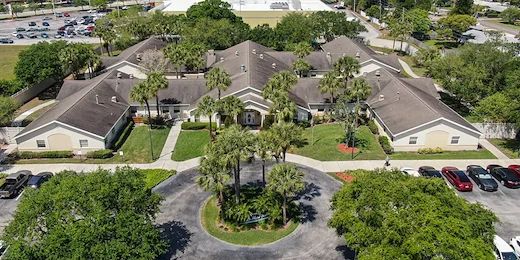
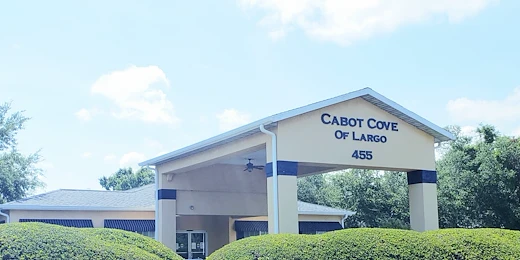
Long Term Care & Skilled Nursing in Palm Harbor, Florida
View All Providers-
2.0Verified
Palm Garden Of Clearwater
3480 Mcmullen Booth Rd Clearwater, FL 33761
Long-Term Care / Skilled NursingSkilled Rehabilitation -
4.5
Regency Oaks
2751 Regency Oaks Blvd Clearwater, FL 33759
Long-Term Care / Skilled NursingSkilled Rehabilitation -
4.0Verified
Westchester Gardens Health & Rehabilitation
3301 N Mcmullen Booth Rd Clearwater, FL 33761
Long-Term Care / Skilled NursingSkilled Rehabilitation -
2.0Verified
Gulfside Health And Rehabilitation Center
1100 N Pine St Clearwater, FL 33756
Long-Term Care / Skilled NursingSkilled Rehabilitation
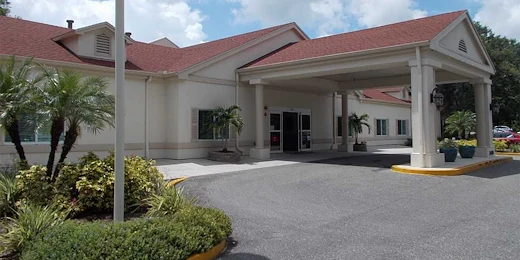
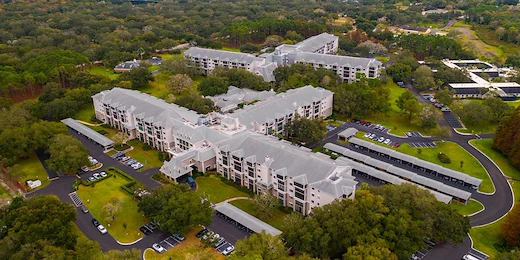
Assisted Living Costs in Florida and Nationwide
The chart lines up Florida's typical monthly assisted living cost against the U.S. average.
For costs and ways to pay, our Florida page has a section for each type of care. Jump straight to nursing homes, assisted living, home care, or independent living.
That page has no memory care cost section for now. For help with dementia caregiving, the state runs the Alzheimer's Disease Initiative. It gives caregivers a break, called respite, and that includes emergency respite. It also offers counseling and support groups. Florida's 11 Area Agencies on Aging run it locally.
Local Resources for Older Adults in Palm Harbor, FL
Here's who to contact for help in Palm Harbor, FL, and across Pinellas County. Follow each link for hours, locations, and who's eligible.
- Area Agency on Aging of Pasco-Pinellas. Helpline staff who link older adults and caregivers to help at home, meals, and counseling. Area Agency on Aging of Pasco-Pinellas
- Palm Harbor Parks & Recreation. Runs five parks and the community center on 16th Street, with daytime classes and clubs. Palm Harbor Parks & Recreation
- Palm Harbor Library. On Nebraska Avenue, with home delivery and monthly Medicare help from a SHINE volunteer. Palm Harbor Library
- PSTA Access. Door-to-door rides in Pinellas County for riders with disabilities, booked by 5 p.m. the day before. PSTA Access
- Florida Long-Term Care Ombudsman Program. Its West Coast District handles concerns in Pinellas County nursing homes and assisted living, at no cost. Ombudsman program
- Medicare Care Compare. A federal lookup that scores each nursing home with stars, including separate scores for inspections and staffing. Care Compare
- FloridaHealthFinder. The state's search tool for licensed assisted living communities in Florida. FloridaHealthFinder
Frequently Asked Questions
No. Palm Harbor, FL, is unincorporated, which means it has no city government. Pinellas County says people in areas like this get their services straight from the county. Library and recreation services come from the Palm Harbor Community Services Agency. A local taxing district pays for it.
The agency also serves East Lake, FL. It runs four groups: Palm Harbor Library, Palm Harbor Parks & Recreation, East Lake Community Library, and East Lake Sports & Recreation. Close to a third of Pinellas County is unincorporated, too. For someone new to the area, the agency is a good place to start for classes, parks, and books.
Palm Harbor Parks & Recreation is a good place to start. Its community center, The Centre, at 1500 16th Street keeps a daytime schedule of fitness classes, workshops, and social clubs. The agency also manages five parks. Bingo meets on Thursday afternoons at Harbor Hall, and it's open to all ages.
Once a month, on the third Thursday, Palm Harbor Fire and Rescue offers a free blood pressure check at the community center. Signing up ahead is required. Classes change from one session to the next, so it's good to look at the agency's current listings before you go.
PSTA Access is the Pinellas Suncoast Transit Authority's door-to-door service. It serves riders who can't use regular buses for all their trips because of a disability. It goes wherever and whenever regular PSTA buses run, but it doesn't leave Pinellas County. Rides can be booked until 5 p.m. the day before, with a 30-minute pickup window.
Who qualifies follows federal ADA rules. It depends on how a disability affects daily life, not on a diagnosis. PSTA mails its decision within 21 days of a finished application. Riders who qualify may also get a free pass for regular routes and help learning to ride them. On regular buses, seniors pay reduced fares when they show ID, and so do Medicare cardholders.
Yes. Palm Harbor Library runs a Homebound Delivery Service for residents of the Palm Harbor Fire District. It's for people kept home by an illness or disability, whether for a while or for good. Each person can get up to 25 items a month. The library sits at 2330 Nebraska Ave.
It's part of the Palm Harbor Community Services Agency. A Pinellas Public Library Cooperative card works at every Cooperative library, and people in unincorporated Pinellas County get the card free. Library staff can walk you through signing up for delivery.
Start with the Area Agency on Aging of Pasco-Pinellas. Its helpline specialists listen, sort out what's needed, and connect callers with local programs. One is the National Family Caregiver Support Program. It gives unpaid caregivers of adults 60 and older supplies, education, and respite, which means a break from caregiving.
The agency also offers the Savvy Caregiver Program, a course of six two-hour sessions. It's for people caring for someone over 60 at home with Alzheimer's disease or a related dementia. The office is open on weekdays. A short note of what would help most, such as time off or training, makes the first call go smoothly.
Florida's Long-Term Care Ombudsman Program helps with concerns about care in nursing homes and assisted living communities. Its services are free and confidential. The program has 14 district offices that together cover the state. Pinellas County falls under the West Coast District, and that office serves no other county.
A few notes make it easier to explain a problem: dates, names, and what happened. Some problems can be settled by talking with the community's staff first, if that feels comfortable. If the concern isn't resolved, the ombudsman program is the next call to make.
Senior Living Near Palm Harbor, FL
Sources, checked Oct. 8, 2026: Pinellas County, Palm Harbor Community Services Agency, Palm Harbor Parks & Recreation, Pinellas County downtown plan, CMS hospital data, BayCare, Mease Dunedin Hospital, BayCare, Mease Countryside Hospital, NOAA climate normals, Florida Statutes, s. 429.35, Florida Department of Elder Affairs, Area Agency on Aging of Pasco-Pinellas, Pinellas County Yellow Dot and Vial of Life, Palm Harbor Library, Pinellas County parks, Pinellas Trail Guide, St. Petersburg College, Florida Statutes, s. 429.178, PSTA, Florida ombudsman district offices, and CMS Five-Star Quality Rating System.