Find Memory Care Near You
Find memory care near you offering secured environments, dementia-trained staff, and 24-hour specialized support for cognitive impairment.
Secure Secure
No Unsolicited Calls No Calls
100% Free Free

Choosing the Right Memory Care Environment

Finding memory care near you means comparing specialized residential communities for moderate-to-severe Alzheimer's, dementia, or significant cognitive impairment - secured units with staff trained to handle behaviors standard assisted living can't manage. Senior Care Finder shows which communities offer secured environments, staff training certifications, and dementia-specific programming - so you can find appropriate care when wandering starts, aggression emerges, or your loved one no longer recognizes you consistently.

Most families search for memory care after a crisis - wandering incident, violent outburst, caregiver hospitalized from exhaustion. By then, they're choosing from whatever has immediate availability, not what's actually best. The average family spends 18-24 months managing escalating dementia at home or in assisted living before admitting memory care is necessary.

The numbers don't lie.

  • 6.9 million Americans 65+ have Alzheimer's (Alzheimer's Association, 2024)
  • By 2050: 12.7 million - nearly double
  • Average memory care resident age: 81-84
  • Typical stay: 2-3 years (disease progression, then death or nursing home transfer)
  • 70% women (they live longer, get Alzheimer's more)
  • Staff ratios: 1:4-6 day shift vs. 1:8-15 in regular assisted living
  • Cost premium over assisted living: 30-50% more monthly

Memory care isn't assisted living with locked doors. It's specialized dementia support; environments designed to reduce confusion, staff trained to de-escalate behaviors without sedation, programming structured to slow cognitive decline. Standard assisted living can't handle moderate-to-severe dementia safely. Staff aren't trained for it. Ratios are too high.

Memory Care Near You provides compassionate support and engaging activities for seniors with cognitive needs
Caregiver reading with senior resident during a memory care activity
Young woman sharing cherished memories with elderly resident

What Memory Care Actually Is

Memory care provides residential housing in secured units with intensive supervision and dementia-specific programming for Alzheimer's disease, vascular dementia, Lewy body dementia, or cognitive impairments exceeding standard assisted living capabilities.

Learn more about what is memory care to understand this specialized care level completely.

Residents live in locked units - typically 15-30 people in a secured neighborhood within assisted living communities or standalone facilities. Small units mean staff learn each person's history, triggers, behavioral patterns. Staff ratios run 1:4-6 days, 1:6-8 nights - double the staffing of standard assisted living because dementia residents require constant supervision.

Who actually needs it:

People with cognitive impairment who:

  • Wander or try to leave (exit-seeking, looking for deceased parents, trying to "go home")
  • Create safety risks (leaving stove on, forgetting medications, getting lost in familiar places)
  • Exhibit behaviors (aggression, sundowning, paranoia, repetitive actions)
  • Can't safely self-direct (don't remember to eat, bathe, dress without prompting)
  • Need 12+ hours daily supervision

Recognize the early signs of dementia to understand when memory care becomes necessary.

Assisted living handles early dementia - mild memory loss, some confusion, but still safe with reminders. Memory care becomes necessary when behaviors threaten safety or exceed assisted living staffing.

Most enter memory care mid-to-late stage. By the time they're wandering at 2am, don't recognize family, or become aggressive when you try to help them bathe - that's memory care territory. Families typically wait 6-12 months past when they should have moved them.

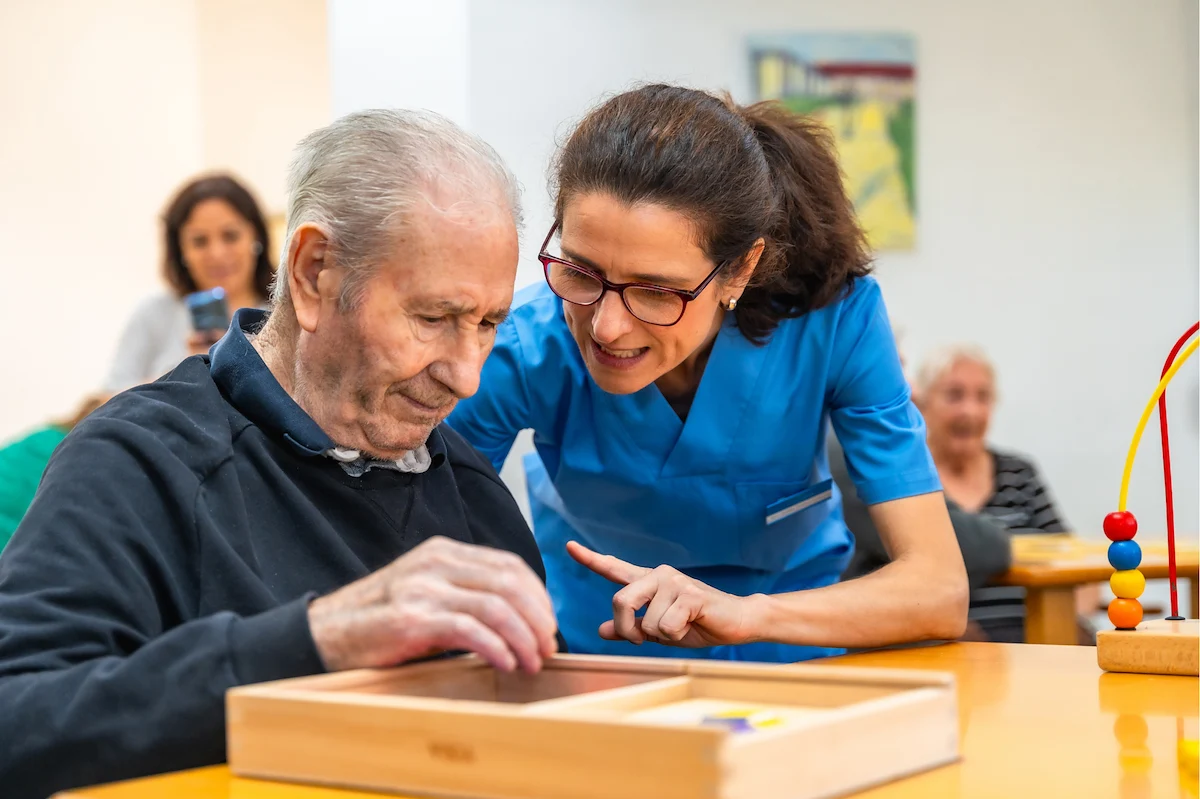
Therapist guiding senior through cognitive activity session
Caregiver providing warm companionship to senior resident

Memory Care vs. Everything Else

Assisted living = personal care for people who remain cognitively intact or mildly impaired. Memory care = dementia-specific support in secured units for people who can't make safe decisions.

The line: Can they be left alone for 30 minutes without safety risk? No? That's memory care.

Nursing homes = 24-hour medical care for complex health needs (wound care, IV therapy, ventilators). Memory care = dementia-focused residential care with nursing oversight but not continuous medical treatment.

If your loved one has advanced dementia PLUS complex medical needs (feeding tube, stage 4 pressure ulcers, dialysis) - that's skilled nursing with dementia specialty, not standalone memory care.

Adult day = daytime supervision, participants go home evenings. Residential memory care = 24-hour care, they live there full-time.

Day programs work for early-to-mid stage when families can still manage nights. Residential becomes necessary when 24-hour supervision is required - period.

What Memory Care Actually Provides

Secured environments - non-negotiable baseline:

Physical security preventing dangerous exits:

  • Locked perimeter (keypad or code access)
  • Disguised exits (painted to blend with walls, covered with murals)
  • Alarmed doors (staff alerted immediately to exit attempts)
  • Secured courtyards (outdoor access without wandering risk)
  • Simplified layouts (long hallways cause confusion and wandering)

Goal: safety without feeling imprisoned. Best communities achieve this through engagement and outdoor access - not just locked doors everywhere.

Dementia-trained staff - more than buzzwords:

All direct care staff receive specialized training beyond basic CNA certification:

  • Dementia communication techniques (simplified language, visual cues, validation therapy)
  • Behavioral de-escalation (redirecting vs. confronting, identifying triggers before meltdowns)
  • Disease progression understanding (what behaviors mean at different stages)
  • Person-centered approaches (learning life histories, honoring past identities)

The catch: staff turnover remains memory care's biggest problem. High-quality communities maintain tenure through competitive pay and supportive management. Ask average staff tenure - under 6 months signals chaos.

Personal care - all ADLs, all the time:

Staff provide complete assistance with Activities of Daily Living:

  • Bathing (often requiring coaxing - many dementia residents fear water)
  • Dressing (choosing weather-appropriate clothes they'll actually wear without fighting)
  • Toileting and incontinence care (70%+ of memory care residents are incontinent)
  • Eating assistance (setup, prompting, feeding - choking risks increase with dementia)
  • Grooming (brushing teeth becomes a battle when they don't recognize the toothbrush)

Unlike assisted living (help when needed), memory care assumes everyone needs extensive assistance. Staff initiate care - residents can't ask for help coherently.

Structured routines - predictability over variety:

Consistent schedules reduce anxiety:

  • Same wake-up time, meal times, activity times daily
  • Visual cues everywhere (clocks, picture schedules, color-coded doors)
  • Repetitive activities they can succeed at (folding laundry, sorting items, simple crafts)
  • Sensory stimulation (music therapy, aromatherapy, tactile activities)

For dementia residents, predictability equals comfort. Novelty causes anxiety and confusion.

Seniors participating in seated exercise class with colorful therapy balls
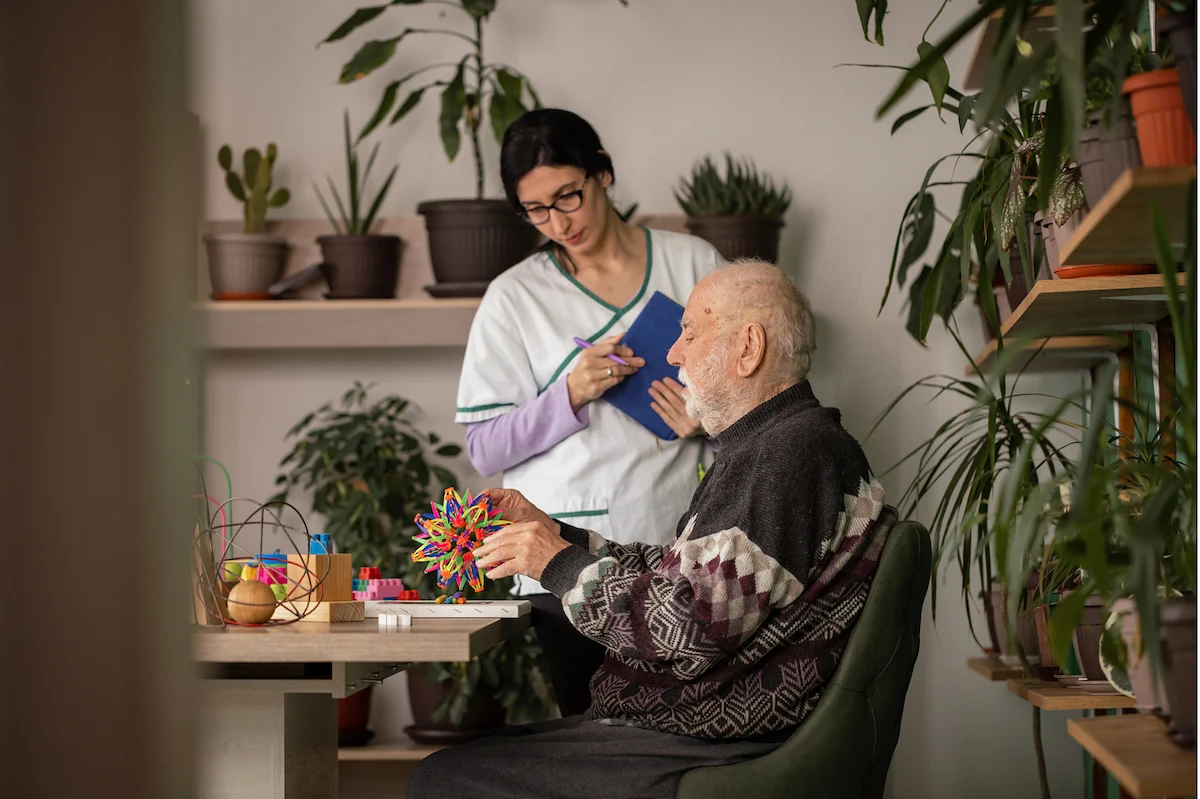
Caregiver assisting senior with cognitive therapy activities

Cognitive programming - slowing the inevitable:

Evidence-based activities maintaining function longer:

  • Reminiscence therapy (discussing past memories - long-term memory lasts longer than short-term)
  • Music therapy (songs from their youth triggering positive responses even in late stages)
  • Sensory engagement (touching textures, smelling familiar scents, looking at high-contrast images)
  • Physical activities (walking groups, chair exercises, gardening adapted to abilities)

These programs don't reverse dementia. They slow decline and maintain quality of life longer than parking residents in front of TVs all day.

Medication and health monitoring:

Nurses oversee all medical aspects:

  • Medication administration (they can't safely self-administer - period)
  • Vital sign monitoring (blood pressure, weight, blood sugar)
  • Physician coordination (communicating with doctors who rarely visit in person)
  • Chronic condition management (diabetes, heart disease, COPD alongside dementia)
  • Pain management (challenging when they can't communicate pain - watch for behavioral changes)

Meals - overcoming eating challenges:

Three meals daily plus snacks, with dementia considerations:

  • Simplified presentation (one item at a time - multiple items confuse)
  • Finger foods (for residents who've forgotten how to use utensils)
  • High-contrast dishes (bright plates vs. white food - visual processing declines)
  • Pureed diets (swallowing difficulties common in late-stage)
  • Patience (they forget they've eaten, refuse meals, or take 90 minutes to finish)

Weight loss is common. Staff monitor intake obsessively and adapt when eating becomes problematic.

Family support - often overlooked, critically important:

Quality memory care supports families:

  • Disease progression education (what's coming next - no sugarcoating)
  • Communication guidance (how to talk to someone who doesn't recognize you)
  • Support groups (other families facing identical struggles)
  • Counseling referrals (grief counseling for anticipatory loss)
  • End-of-life planning conversations (hospice, DNR, comfort care vs. aggressive intervention)

Dementia is a family disease. Communities recognizing this provide more than just resident care.

Healthcare professional consulting with senior resident at home

How to Choose Without Regret

1 Visit during sundowning hours - 4-6pm

Sundowning (increased confusion and agitation late afternoon/evening) affects 60%+ of dementia residents. Morning tours showcase calm, cooperative residents. Return at 4-6pm to see reality:

  • How staff handle agitation (calm redirection or frustrated reactions?)
  • Resident anxiety levels (everyone pacing or relatively calm?)
  • Staffing during hardest hours (adequate or understaffed?)
  • Environment during shift changes (when coverage is leanest)

What you see at 5pm is what your loved one will experience daily.

2 Watch staff interactions - forget the locked doors

Physical security matters less than staff competence. Observe how staff engage:

  • Do they make eye contact with residents who can't respond coherently?
  • Do they redirect behaviors gently or scold and correct?
  • Do they seem rushed or take time to connect?
  • Can they tell you about individual residents without checking charts?

Staff-to-resident ratios matter. Staff quality matters more. A community with 1:6 ratio but high turnover and impatient staff provides worse care than 1:8 with experienced, compassionate caregivers who've been there 3+ years.

3 Ask what happens when they're dying

Memory care serves mid-to-late stage. Late-stage progresses to end-stage - bedridden, unable to eat, no communication, actively dying.

Ask directly:

  • Do you provide hospice care on-site or transfer to nursing homes?
  • What's the care plan when residents become bedbound?
  • How do you handle end-of-life care?
  • What percentage of residents pass away here vs. being transferred?

Some communities provide care through death. Others transfer to skilled nursing when residents become bedbound or require complex medical care. Know this upfront - another transfer in end-stage is traumatic for everyone.

4 Verify training credentials - not marketing fluff

"Dementia-trained staff" means nothing without specifics.

Ask:

  • What dementia training do CNAs receive? (Hours? Certification? Ongoing?)
  • What percentage of staff hold dementia certifications?
  • How often is training refreshed?
  • Who provides training? (In-house? Alzheimer's Association? Online modules only?)

Request proof: Alzheimer's Association training certificates, NCCDP certification, university-based programs. If they can't show credentials, the "training" is probably a 20-minute video during orientation.

Review the essential questions to ask at memory care tours for a comprehensive checklist.

5 Understand the fee game - it's never simple

Memory care pricing includes multiple components:

  • Base rate: Apartment, meals, basic care, activities.
  • Care levels: Additional charges based on intensity (incontinence, two-person transfers, elopement risk, aggressive behaviors). As disease progresses, costs increase - sometimes significantly.
  • Move-in fees: One-time community fees or deposits.
  • Extra charges: Medications, incontinence supplies (often $200-400/month), salon, outings.

Demand a complete fee schedule:

  • Current base rate
  • Care level structure (how much do costs increase at each level?)
  • Average monthly fee for residents at your loved one's stage
  • Annual fee increase history (percentage)

Some communities advertise low base rates then hit families with $1,500-2,000 monthly care level charges three months later. Get it in writing.

6 Trial stays - rare but valuable if offered

Some memory care allows short respite stays. Less common than assisted living because new residents disrupt routines.

If offered, use it:

  • How does your loved one adjust?
  • Do they seem calmer or more agitated?
  • How does staff interact with them specifically?
  • Does programming engage them or confuse them?

If trials aren't offered (common), request extended tours at different times over multiple days.

Sundowning (increased confusion and agitation late afternoon/evening) affects 60%+ of dementia residents. Morning tours showcase calm, cooperative residents. Return at 4-6pm to see reality:

  • How staff handle agitation (calm redirection or frustrated reactions?)
  • Resident anxiety levels (everyone pacing or relatively calm?)
  • Staffing during hardest hours (adequate or understaffed?)
  • Environment during shift changes (when coverage is leanest)

What you see at 5pm is what your loved one will experience daily.

Physical security matters less than staff competence. Observe how staff engage:

  • Do they make eye contact with residents who can't respond coherently?
  • Do they redirect behaviors gently or scold and correct?
  • Do they seem rushed or take time to connect?
  • Can they tell you about individual residents without checking charts?

Staff-to-resident ratios matter. Staff quality matters more. A community with 1:6 ratio but high turnover and impatient staff provides worse care than 1:8 with experienced, compassionate caregivers who've been there 3+ years.

Memory care serves mid-to-late stage. Late-stage progresses to end-stage - bedridden, unable to eat, no communication, actively dying.

Ask directly:

  • Do you provide hospice care on-site or transfer to nursing homes?
  • What's the care plan when residents become bedbound?
  • How do you handle end-of-life care?
  • What percentage of residents pass away here vs. being transferred?

Some communities provide care through death. Others transfer to skilled nursing when residents become bedbound or require complex medical care. Know this upfront - another transfer in end-stage is traumatic for everyone.

"Dementia-trained staff" means nothing without specifics.

Ask:

  • What dementia training do CNAs receive? (Hours? Certification? Ongoing?)
  • What percentage of staff hold dementia certifications?
  • How often is training refreshed?
  • Who provides training? (In-house? Alzheimer's Association? Online modules only?)

Request proof: Alzheimer's Association training certificates, NCCDP certification, university-based programs. If they can't show credentials, the "training" is probably a 20-minute video during orientation.

Review the essential questions to ask at memory care tours for a comprehensive checklist.

Memory care pricing includes multiple components:

  • Base rate: Apartment, meals, basic care, activities.
  • Care levels: Additional charges based on intensity (incontinence, two-person transfers, elopement risk, aggressive behaviors). As disease progresses, costs increase - sometimes significantly.
  • Move-in fees: One-time community fees or deposits.
  • Extra charges: Medications, incontinence supplies (often $200-400/month), salon, outings.

Demand a complete fee schedule:

  • Current base rate
  • Care level structure (how much do costs increase at each level?)
  • Average monthly fee for residents at your loved one's stage
  • Annual fee increase history (percentage)

Some communities advertise low base rates then hit families with $1,500-2,000 monthly care level charges three months later. Get it in writing.

Some memory care allows short respite stays. Less common than assisted living because new residents disrupt routines.

If offered, use it:

  • How does your loved one adjust?
  • Do they seem calmer or more agitated?
  • How does staff interact with them specifically?
  • Does programming engage them or confuse them?

If trials aren't offered (common), request extended tours at different times over multiple days.

What Memory Care Costs - No Sugarcoating

Memory care is the most expensive residential care besides skilled nursing.

Why it costs more:

  • Secured environments (construction, technology, design)
  • Higher staff ratios (1:4-6 vs. 1:10-15)
  • Specialized training (dementia-certified staff command higher wages)
  • Programming (evidence-based cognitive activities, therapies)
  • Behavioral management (expertise handling aggression, wandering, sundowning)

Coastal and major metros cost substantially more than rural regions. Same pattern as other senior care, but memory care averages 30-50% higher than assisted living everywhere.

What's included (usually):

  • Apartment or room (private or semi-private)
  • Three meals plus snacks
  • All ADL assistance
  • Medication management
  • Dementia programming
  • Secured environment and 24-hour supervision
  • Housekeeping and laundry

What costs extra (often):

  • Care level increases (as disease progresses)
  • Incontinence supplies ($200-400/month)
  • Salon services
  • Prescriptions themselves
  • Specialized medical equipment
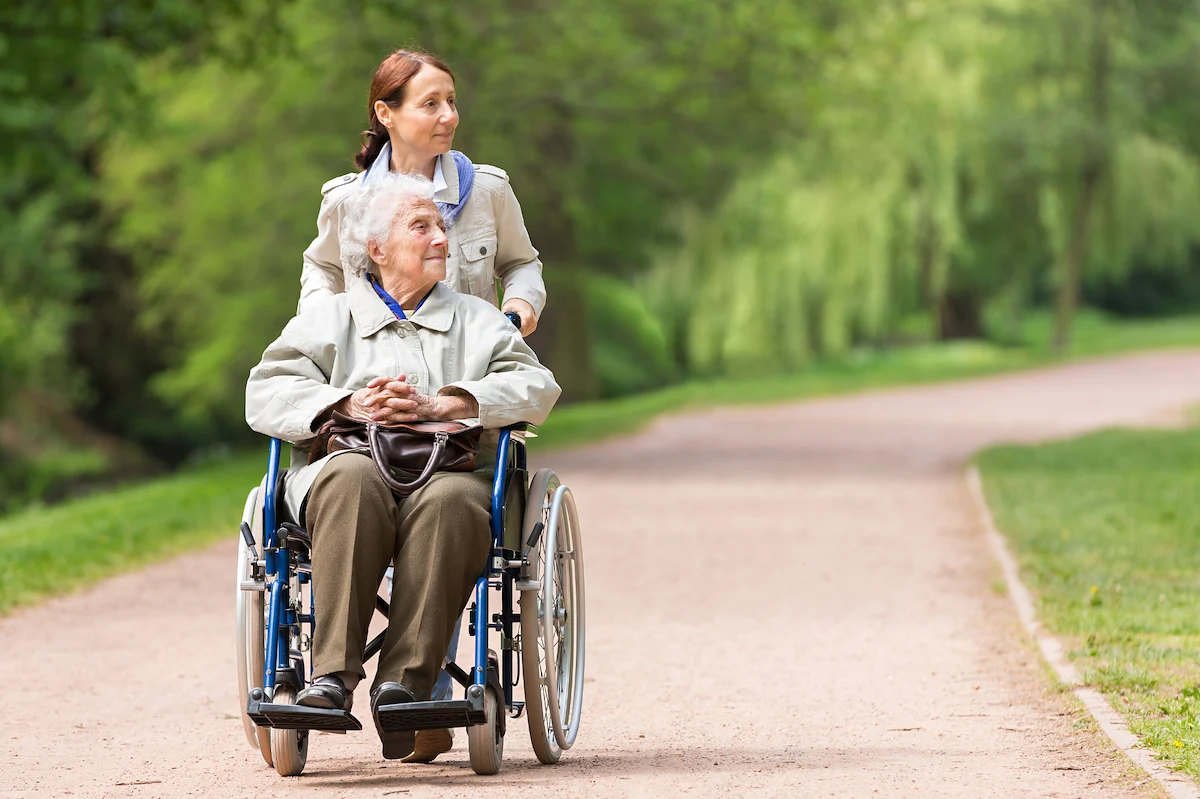
Caregiver accompanying senior on peaceful outdoor walk in wheelchair
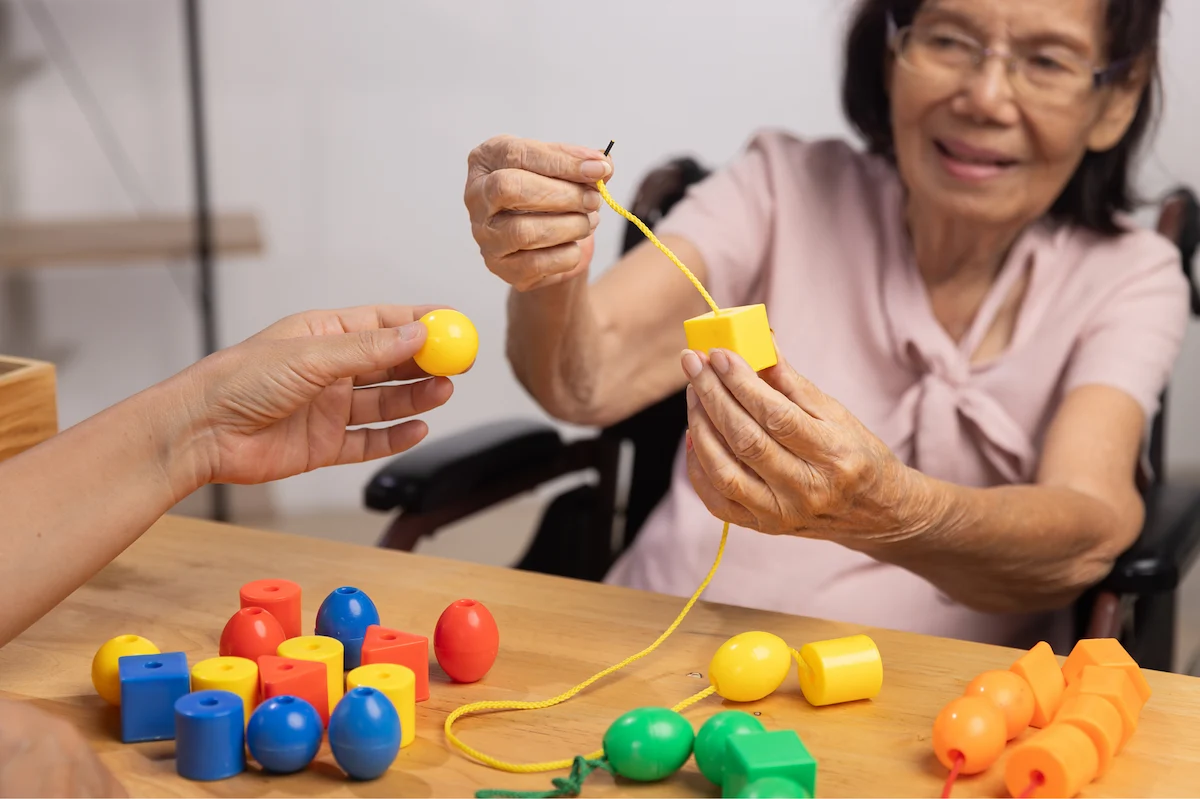
Senior engaging in fine motor skills activity during therapy session

Payment reality - not myths:

Private pay: Most common initially. Savings, retirement income, selling the home, life insurance, family contributions. Run the numbers: if monthly cost is $7,500 and you have $180,000 saved, that's 24 months. Then what?

Long-term care insurance: Many policies cover memory care. Verify: daily/monthly benefit amount, coverage duration, elimination period (often 90 days before coverage starts), and whether it requires specific dementia diagnosis. Long-term care insurance buys time - typically 1-3 years - but doesn't eliminate need for other funding.

Medicaid: Some states cover memory care after private funds deplete. Reality check: some states have robust dementia waiver programs, others provide minimal coverage or years-long waitlists. Many memory care communities don't accept Medicaid (low reimbursement). Some accept Medicaid only after 1-2 years private pay. Verify your state's coverage AND which communities accept it before money runs out.

Veterans benefits: VA Aid & Attendance provides roughly $2,000-2,400/month for qualifying veterans or surviving spouses. Offsets costs but doesn't cover full memory care fees. Check VA.gov eligibility.

Medicare: Does NOT cover memory care residential costs. Period. Medicare covers skilled services (therapy, nursing) if medically necessary but not room, board, or custodial dementia care.

Most residents enter with 12-24 months private pay, then transition to Medicaid. Plan this transition proactively - confirm Medicaid acceptance, understand spend-down, work with elder law attorneys - or face crisis scrambling when funds deplete.

Choosing memory care feels like abandonment. Families agonize, delay, feel crushing guilt. Reality: professional memory care often provides better quality of life than exhausted family caregivers burning out at home. Trained staff understand dementia behaviors. Structured environments reduce anxiety. And removing 24-hour caregiving burden preserves relationships - you can be a daughter or son again instead of a caregiver collapsing from exhaustion and resentment.

You didn't fail them. The disease progressed beyond what one person can manage. That's reality.

Physical therapist helping senior with mobility exercises

Find the Right Memory Care Community

Memory care provides specialized dementia support in secured environments with trained staff for moderate-to-severe Alzheimer's or cognitive impairment requiring 24-hour supervision. 6.9 million Americans have Alzheimer's - doubling by 2050 as Boomers age. Visit during sundowning hours, verify training credentials with proof, ask about end-of-life policies directly, and understand complete fee structures including care level increases. This decision is never easy - safety and specialized care outweigh guilt. Most families wish they'd made the move 6 months earlier than they did.

How it Works

Mobile phone showing Care Finder app

How it Works

With one click, uncover all senior care options that meet your needs. Type in your city, county or zip code and discover the comprehensive list you've been searching for.

Review multiple communities side-by-side with detailed comparisons. Evaluate amenities, services, pricing, and ratings to understand which options best match your specific needs and preferences.

Connect directly with your top choices to schedule tours and ask questions. Get the personalized information you need to make the right decision for yourself or your loved one.

Guiding families to care they can trust.

Senior Care Finder is the only complete nationwide directory of independent living, assisted living, memory care, long-term care, skilled nursing, home health care, hospice providers, and more. Search by location or provider name to find the most comprehensive list available. Compare quality ratings, amenities, and services offered to help you narrow your list. Share your favorites with loved ones and contact providers directly. Search, compare, and find the best senior care.

Happy families embracing, showing the care and connection we help facilitate
  • Customer Testimonial

    "Senior Care Finder helped to make me aware of the choices out there. It was nice to have the information at my fingertips and not have to try and get all the information myself. Timesaving!"

  • Customer Testimonial

    "I was looking for a listing of any providers that I was not aware of. Senior Care Finder was so helpful."

  • Customer Testimonial

    "As someone who spent the last several years trying to navigate this world, and immediately just found the place where my mom is now living a thousand miles away... your service is not only sleek, direct and easy to use, it's going to do a lot of good in the world."

Explore More Locations

Connecting families with
helpful resources

  • What are the best senior living options in Bakersfield?

    Senior Care Finder is the only complete nationwide directory of independent living, assisted living, memory care, long-term care, skilled nursing, & home health care.

  • What free resources are available to help me confidently navigate Senior Care decisions?

    Senior Care Finder is the only complete nationwide directory of independent living, assisted living, memory care, long-term care, skilled nursing, & home health care.

  • What should be the focus for healthy weight loss or maintaining weight for seniors?

    Senior Care Finder is the only complete nationwide directory of independent living, assisted living, memory care, long-term care, skilled nursing, & home health care.

  • How can I make finding senior living and senior care less overwhelming?

    Senior Care Finder is the only complete nationwide directory of independent living, assisted living, memory care, long-term care, skilled nursing, & home health care.

  • What should I ask when touring memory care communities?

    Senior Care Finder is the only complete nationwide directory of independent living, assisted living, memory care, long-term care, skilled nursing, & home health care.