Adult Day Care Near You: Compare Trusted Local Centers
Find adult day care near you offering social activities, professional supervision, and respite for family caregivers.
Secure Secure
No Unsolicited Calls No Calls
100% Free Free

What Adult Day Care Provides for Families and Seniors

Finding adult day care near you means comparing local centers offering daytime supervision, social activities, and medical support for seniors who live at home but can't be left alone safely. Senior Care Finder shows program types, services offered, and operating hours – no sales pitch, just what each center actually provides and what you'll pay.

Family caregivers provide 34 hours of unpaid care weekly (AARP research). That's nearly a full-time job – on top of actual jobs, managing households, and trying to maintain their own health. Without daytime support, caregivers quit work, sacrifice their own wellbeing, or collapse from burnout. Adult day care creates a middle ground – professional supervision during work hours while your loved one stays home evenings and weekends, preserving independence longer than residential care.

Many family caregivers balance caregiving with employment. Explore the 9 best part-time and side jobs for seniors if you're looking for flexible work options while managing care responsibilities.

Caregiver and seniors socializing together outside adult day care near you
Senior woman enjoying craft activities with friends at a community center
Group of seniors working on arts and crafts projects in a library activity room

By the numbers:

  • 7,500+ adult day care centers nationwide (National Adult Day Services Association)
  • Average participant age: mid-70s to early 80s
  • Operating hours: weekdays 7am–6pm (some offer extended or weekend hours)
  • Typical attendance: 2–5 days weekly depending on family needs
  • Staff ratios: 1:6–8 for social programs, lower for medical/memory care

Adult day care fills a critical gap – seniors who need supervision and engagement but don't require 24-hour nursing care. Your 82-year-old parent with mild dementia who can't be left alone but doesn't need assisted living yet. Or your dad recovering from a stroke who needs therapy and socialization during the day while you work. It's the option between quitting your job to provide care and moving them into residential care before they actually need it.

Senior couple laughing together during a visit in a bright common area

What Is Adult Day Care?

Adult day care – also called adult day services or adult day health care – provides daytime supervision, activities, and care for older adults who live at home but can't be left alone safely during the day.

Participants arrive in the morning (often via center-provided transportation), spend the day in structured programs with activities and meals, then return home in the evening. It's designed for people who:

  • Live with family members who work during the day
  • Need supervision due to cognitive impairment, mobility issues, or chronic conditions
  • Benefit from social interaction and structured activities
  • Don't require 24-hour residential care

vs. Home Care: Home care brings caregivers to your house for companionship, personal care, and light housekeeping. Adult day care sends your loved one to a center for group activities, social interaction, and professional supervision. Day care costs less per hour than one-on-one home care but requires transportation and happens only during center hours.

vs. Assisted Living: Assisted living provides 24-hour residential care where they live full-time. Adult day care is daytime only – they come home every evening. Day care preserves home living and family involvement while providing structured daytime support.

Healthcare professional leading a group activity with seniors at an outdoor patio table
Caregiver assisting senior woman with watercolor painting in a comfortable living room

Three Types – Know the Difference

Adult day services fall into three categories. Many centers blend elements, but understanding the differences matters for matching needs to programs.

Social Model – the entry level: Focus on recreation, socialization, and community. Ideal for relatively healthy seniors who need supervision during the day but minimal medical care, experience loneliness or isolation at home, or benefit from structured activities and peer interaction. Activities include games, arts and crafts, exercise classes, group outings, music programs, and discussion groups.

Discover the best fitness activities for seniors to understand activity options that keep participants engaged and healthy.

Health Model – adding medical oversight: Provides nursing care alongside social activities. Serves participants with chronic conditions requiring monitoring (diabetes, heart disease, COPD), those needing physical, occupational, or speech therapy, and individuals taking multiple medications requiring administration and tracking. Services include medication management, vital sign monitoring, wound care, chronic disease management, and rehabilitation therapies.

Read about aging well with simplified small habits to complement the health monitoring and support provided at day care centers.

Health-model programs cost more – you're paying for licensed nurses on staff, not just activity coordinators.

Caregiver supervising seniors playing cards at a table in a cozy common room
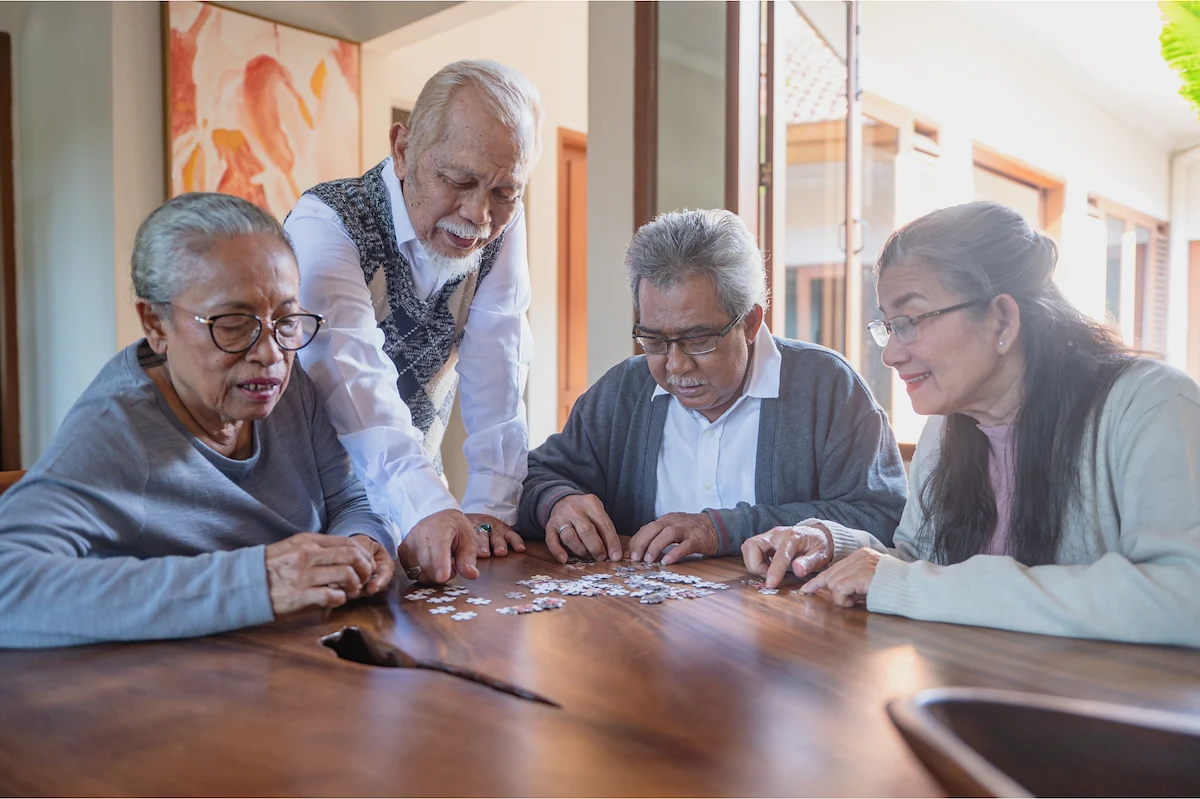
Senior women engaged in a puzzle activity together at a care facility
Seniors participating in a guided exercise class with resistance bands at a fitness studio

Specialized Memory Care – secured environments: Designed exclusively for Alzheimer's, dementia, or significant cognitive impairment. Features include secured environments preventing wandering, staff trained in dementia communication and behavioral management, structured routines reducing confusion and anxiety, cognitive stimulation activities like reminiscence therapy and music therapy, plus caregiver support and education programs.

If your loved one wanders, doesn't recognize familiar people consistently, or exhibits challenging behaviors – standard social-model day care won't work. You need this level. Learn more about memory care options if dementia is the primary concern.

Some centers offer all three models under one roof, adjusting care to individual participants. Others specialize exclusively in one model. Some assisted living communities and nursing homes also operate adult day programs for non-residents, offering more medical resources but often feeling more institutional than community-based programs.

Physical therapist helping senior woman with balance exercises on a stability board

What Centers Actually Provide

Supervision and safety: Trained staff monitor participants throughout the day, ensuring safety and providing assistance as needed. Social programs maintain 1:6–8 staff-to-participant ratios. Medical and memory care operate at lower ratios for more intensive support.

Social activities: Structured programming keeps participants engaged – group games, exercise classes adapted to varying mobility levels, arts and crafts, music and entertainment, discussion groups, and holiday celebrations. The goal is keeping people mentally, physically, and socially active. Isolation accelerates decline.

Personal care: Staff help with Activities of Daily Living including eating assistance, toileting and incontinence care, grooming support, and mobility assistance.

Meals: Most centers provide breakfast, lunch, and snacks. Special diets accommodated (diabetic, low-sodium, pureed for dysphagia). Meals meet nutritional guidelines for older adults. One less thing for caregivers to manage.

Group of seniors doing chair-based stretching exercises in a fitness class
Healthcare professional consulting with senior woman using a tablet at home

Health monitoring (at health-model centers): Blood pressure, blood sugar, and weight checks. Medication administration and tracking. Wound care and health assessments. Primary care physician coordination. Physical, occupational, or speech therapy sessions.

Transportation: Many centers offer door-to-door transportation – picking up participants in the morning, returning them home in the evening. Vehicles are typically wheelchair-accessible vans or buses with trained drivers. Some centers charge separately for transportation while others include it in daily rates. Verify before assuming it's included.


Caregiver support: Beyond caring for participants, many programs support family caregivers through education workshops on disease management, support groups connecting caregivers facing similar challenges, care planning assistance, and respite – knowing your loved one is safe and engaged while you work, rest, or handle errands.

Check out the top 10 apps for older adults to help caregivers stay connected and manage care coordination more effectively.

Group of seniors working together on a jigsaw puzzle at a dining table
Seniors playing a bingo game together at a bright community room table

How to Choose – Without Getting Sold

1 Match program type to actual needs

Does your loved one need medical monitoring, or primarily social engagement? Memory care, or general supervision? Choosing a program more intensive than necessary means paying for unused services. Choosing one less intensive than required puts your loved one at risk.

Ask yourself: Do they have chronic conditions requiring nursing oversight? Do they need help with personal care? Is cognitive impairment the primary concern requiring a secured environment? Or do they mainly need companionship and structured activities?

2 Show up unannounced during operating hours

Scheduled tours showcase centers at their best. Drop in during mid-morning or afternoon to see reality: staff-to-participant ratios in practice, how staff interact with participants, participant engagement levels, and facility cleanliness during regular operations.

What you see unannounced is what you get.

3 Verify licensing – not just marketing claims

Adult day care centers require state licensing. Check for a current license displayed and up to date, recent violations or complaints on state licensing board records, staff credentials (RNs or LPNs for health-model programs, dementia certification for memory care), and liability insurance coverage.

Some centers pursue voluntary accreditation through CARF (Commission on Accreditation of Rehabilitation Facilities) – a signal of commitment to quality standards beyond minimums.

4 Ask about staffing

High staff turnover disrupts care and relationships. Ask directly: What's your average staff tenure? Under 6 months is a red flag. What training do direct care staff receive beyond state minimums? Who supervises staff daily? What's your backup plan when staff call out sick?

If they can't answer these questions clearly, keep looking.

5 Understand transportation logistics

If the center provides transportation, ask about the pickup and drop-off window, whether vehicles are wheelchair-accessible, what happens if your loved one isn't ready at pickup time, and the backup plan for vehicle breakdowns.

If you're providing transportation yourself, verify convenient drop-off procedures and parking availability.

6 Trial period before committing long-term

Most centers allow trial days or weeks. Use it. Observe how your loved one responds – do they seem happy or anxious to leave? Does the activity level match their abilities? How's staff rapport with your loved one?

If it's not a good fit, try another center. Personality match matters as much as services on paper.

Does your loved one need medical monitoring, or primarily social engagement? Memory care, or general supervision? Choosing a program more intensive than necessary means paying for unused services. Choosing one less intensive than required puts your loved one at risk.

Ask yourself: Do they have chronic conditions requiring nursing oversight? Do they need help with personal care? Is cognitive impairment the primary concern requiring a secured environment? Or do they mainly need companionship and structured activities?

Scheduled tours showcase centers at their best. Drop in during mid-morning or afternoon to see reality: staff-to-participant ratios in practice, how staff interact with participants, participant engagement levels, and facility cleanliness during regular operations.

What you see unannounced is what you get.

Adult day care centers require state licensing. Check for a current license displayed and up to date, recent violations or complaints on state licensing board records, staff credentials (RNs or LPNs for health-model programs, dementia certification for memory care), and liability insurance coverage.

Some centers pursue voluntary accreditation through CARF (Commission on Accreditation of Rehabilitation Facilities) – a signal of commitment to quality standards beyond minimums.

High staff turnover disrupts care and relationships. Ask directly: What's your average staff tenure? Under 6 months is a red flag. What training do direct care staff receive beyond state minimums? Who supervises staff daily? What's your backup plan when staff call out sick?

If they can't answer these questions clearly, keep looking.

If the center provides transportation, ask about the pickup and drop-off window, whether vehicles are wheelchair-accessible, what happens if your loved one isn't ready at pickup time, and the backup plan for vehicle breakdowns.

If you're providing transportation yourself, verify convenient drop-off procedures and parking availability.

Most centers allow trial days or weeks. Use it. Observe how your loved one responds – do they seem happy or anxious to leave? Does the activity level match their abilities? How's staff rapport with your loved one?

If it's not a good fit, try another center. Personality match matters as much as services on paper.

What Adult Day Care Actually Costs

Costs vary by program type, location, and services included. Most centers charge daily rates – full-day or half-day options. Some offer monthly packages for regular attendees. Others charge per visit for occasional use.

What drives costs up: Social-model costs less than health-model or memory care. Urban and high-cost areas charge more than rural regions. Transportation, meals, and therapy sessions may be bundled or charged separately. Some centers offer discounts for multiple days weekly.

Payment options: Private pay is the most common method. Some states cover adult day care through Medicaid waiver programs – coverage varies dramatically by state. Veterans or surviving spouses may qualify for VA Aid & Attendance benefits providing roughly $2,000–$2,400 per month. Some long-term care insurance policies cover adult day services. Traditional Medicare does NOT cover adult day care – Medicare Advantage plans may include some coverage.

Adult day care requires transportation logistics and adjusting to a new routine. Resistance is common initially. But hiring in-home caregivers for equivalent hours costs significantly more, and your loved one may experience isolation without social interaction. Day care combines professional supervision, peer engagement, and structured activities at a more accessible cost than equivalent one-on-one home care.

Caregiver observing senior woman doing cognitive therapy with a colorful bead maze

Find the Right Adult Day Care Center

Adult day care provides daytime supervision, social activities, and medical support for seniors living at home who can't be left alone safely. 7,500+ centers nationwide offer social, health, or memory care programs with typical weekday hours.

This option supports family caregivers who need to work while preserving home living longer than residential care. Match program type to actual needs, show up unannounced to see real operations, and verify state licensing before enrolling. Trial periods reveal whether it's the right fit – use them.

How it Works

Mobile phone showing Care Finder app

How it Works

With one click, uncover all senior care options that meet your needs. Type in your city, county or zip code and discover the comprehensive list you've been searching for.

Review multiple communities side-by-side with detailed comparisons. Evaluate amenities, services, pricing, and ratings to understand which options best match your specific needs and preferences.

Connect directly with your top choices to schedule tours and ask questions. Get the personalized information you need to make the right decision for yourself or your loved one.

Guiding families to care they can trust.

Senior Care Finder is the only complete nationwide directory of independent living, assisted living, memory care, long-term care, skilled nursing, home health care, hospice providers, and more. Search by location or provider name to find the most comprehensive list available. Compare quality ratings, amenities, and services offered to help you narrow your list. Share your favorites with loved ones and contact providers directly. Search, compare, and find the best senior care.

Happy families embracing, showing the care and connection we help facilitate
  • Customer Testimonial

    "Senior Care Finder helped to make me aware of the choices out there. It was nice to have the information at my fingertips and not have to try and get all the information myself. Timesaving!"

  • Customer Testimonial

    "I was looking for a listing of any providers that I was not aware of. Senior Care Finder was so helpful."

  • Customer Testimonial

    "As someone who spent the last several years trying to navigate this world, and immediately just found the place where my mom is now living a thousand miles away... your service is not only sleek, direct and easy to use, it's going to do a lot of good in the world."

Explore More Locations

Connecting families with
helpful resources

  • What are the best senior living options in Bakersfield?

    Senior Care Finder is the only complete nationwide directory of independent living, assisted living, memory care, long-term care, skilled nursing, & home health care.

  • What free resources are available to help me confidently navigate Senior Care decisions?

    Senior Care Finder is the only complete nationwide directory of independent living, assisted living, memory care, long-term care, skilled nursing, & home health care.

  • What should be the focus for healthy weight loss or maintaining weight for seniors?

    Senior Care Finder is the only complete nationwide directory of independent living, assisted living, memory care, long-term care, skilled nursing, & home health care.

  • How can I make finding senior living and senior care less overwhelming?

    Senior Care Finder is the only complete nationwide directory of independent living, assisted living, memory care, long-term care, skilled nursing, & home health care.

  • What should I ask when touring memory care communities?

    Senior Care Finder is the only complete nationwide directory of independent living, assisted living, memory care, long-term care, skilled nursing, & home health care.